Manual Muscle Release & Trigger Point Therapy in Glendale, AZ
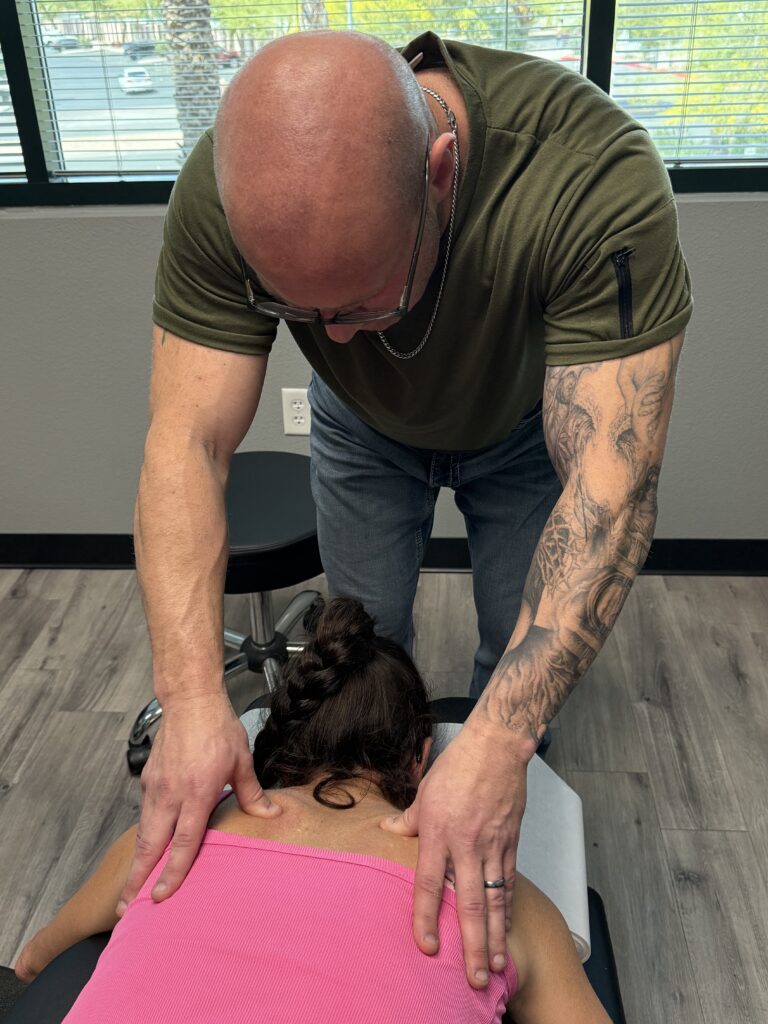
Manual muscle release is hands-on work for muscle knots, tightness and movement that feels restricted. At Muscle Chiropractic in Glendale, AZ, Dr. Tim Ballitch uses his hands, not tools, to find tight or tender spots and apply steady, controlled pressure and stretch. He examines you first and uses it when it fits your plan, often alongside a chiropractic adjustment and corrective exercise.
Choose the right visit
- Already a patient? Book an Existing Patient Visit — $67 (credit card price), even for a new problem.
- New to Muscle Chiropractic (ages 12+)? Book a New Patient Visit — about 30 minutes, with your history, an exam and an adjustment when appropriate. $154.13 (credit card price). See what to expect.
Hands-on muscle release is included, when appropriate, in New Patient and Existing Patient visits, with no extra fee and no separate appointment. Not every technique is used at every visit; mention the area that feels tight, and Dr. Tim will decide whether hands-on work belongs in your plan.
Prices shown are credit card prices. A cash discount is available when paying at the time of service.
Questions first? Call or text 480-740-9619.
What manual muscle release includes
“Manual” simply means by hand. Depending on what your exam shows, Dr. Tim may use:
- Trigger point therapy (ischemic pressure): targeted pressure applied to selected tight or tender muscle areas, often called knots, sometimes combined with gentle movement or stretching. Pressure stays within what you can tolerate.
- Myofascial release: slow, sustained pressure and stretch on a muscle and the connective tissue around it (fascia) to help the area move more freely.
- Soft tissue mobilization: hands-on gliding, kneading and pressure through a tight muscle or along a tendon to improve how the area moves.
You may also see ischemic pressure called ischemic compression or trigger point pressure release. The names differ, but they describe the same approach: targeted pressure on selected tender muscle areas.
Hands-on release vs. scraping and cupping
Muscle Chiropractic offers both hands-on and tool-based soft tissue work. They aren’t the same:
- Manual muscle release uses Dr. Tim’s hands only. He can feel how the tissue responds and change pressure moment to moment, which suits small, specific tender spots.
- IASTM (muscle scraping) uses smooth-edged tools glided along the skin, usually over a broader area.
- Cupping uses suction cups that lift the skin and the tissue underneath instead of pressing down.
Dr. Tim may use one, combine them or use none, depending on your exam. Learn more about IASTM, muscle scraping and cupping.
Who might seek it?
People often ask about hands-on muscle work for:
- Knots and tightness in the neck, upper back and shoulders, including from desk work, phones or driving (neck pain, shoulder pain)
- Low back and hip muscles that feel tight or guarded (back pain)
- Tight forearms from gripping, lifting, tools or racket sports (tennis and golfer’s elbow)
- Tight calves and feet that come with heel pain (heel pain and plantar fasciitis)
- Tight jaw and temple muscles, as part of TMJ and jaw pain care
- Muscles that feel stiff or slow to recover from training or sport (sports chiropractic)
Tight muscles are often part of a bigger picture, such as a joint that isn’t moving well, a strength gap or training that ramped up too fast. That’s why Dr. Tim looks at the whole area, not only the sore spot.
What happens at your visit
- History: where it’s tight, what makes it worse, your work and training, and your health history, including medications such as blood thinners.
- Exam: how you move, which joints are stiff, where muscles are tender and, when needed, strength, reflexes and sensation.
- Explanation: what Dr. Tim found and what he recommends, before any treatment.
- Hands-on work, if it fits: focused pressure and stretch on the muscles involved. Firm pressure can feel uncomfortable but shouldn’t be more than you can tolerate. Tell Dr. Tim and he’ll ease off or stop.
- Recheck and plan: he rechecks how you move and may show you exercises to keep up between visits.
Some people feel mild soreness in the treated area for a day or so. Tell Dr. Tim if anything feels worse rather than better.
How it fits with adjustments, exercise and other care
Hands-on release is usually one part of a visit rather than a stand-alone treatment. Depending on your exam, your plan may also include:
- A chiropractic adjustment for joints that aren’t moving well, by hand or with ProAdjuster.
- Corrective exercise: mobility, stretching and strengthening chosen for the muscles involved, so changes are more likely to last.
- IASTM (muscle scraping) or cupping when a broader area needs work.
- For some persistent tendon problems, Dr. Tim may discuss radial shockwave (radial pressure wave therapy) or Class IV laser therapy as separate services. Not everyone needs them.
When to check with a medical provider first
Hands-on pressure isn’t used over open wounds, skin infections or areas with significant bruising, and it may need to be modified if you take blood thinners or bruise easily. Tell Dr. Tim about your medications and health history.
Get prompt medical care instead if a calf is swollen, warm, red or painful without a clear reason (this can signal a blood clot), if pain follows a fall or significant injury, or if you have spreading numbness or weakness, fever, chest pain or shortness of breath.
What the research shows
Studies of hands-on trigger point therapy are mixed. A review of studies in people with neck and upper back muscle pain found that trigger point manual therapy and dry needling both improved pain and function in the short to medium term (Lew et al., J Man Manip Ther, 2021). A broader review of chronic pain found the overall evidence for trigger point manual therapy weak, with no clear short-term pain benefit (Denneny et al., Arch Phys Med Rehabil, 2019). That’s why Dr. Tim uses hands-on work as one part of a plan, with exercise and rechecks, rather than as a stand-alone fix. Results vary, and no treatment works for everyone.
Common questions
Is this the same as a massage?
No. It isn’t a full-body relaxation massage. Dr. Tim focuses on the specific muscles your exam points to, as part of a chiropractic visit.
Does it hurt?
Firm pressure on a tender spot can feel uncomfortable and may bring on the familiar ache. It should stay within what you can tolerate, and you can ask Dr. Tim to ease off or stop at any time.
Can I ask for it?
Yes. Book your usual visit and mention it. Dr. Tim will tell you after your exam whether it fits.
Do you take insurance?
Muscle Chiropractic is cash-based and doesn’t bill health insurance. HSA and FSA cards are accepted, and receipts with procedure codes are available.
Visit us in Glendale
Our only office is at 7155 W. Campo Bello Dr., Building B, Suite B-115, Glendale, AZ 85308. Patients visit from nearby Peoria, Surprise, Sun City, Sun City West and North Phoenix. Call or text 480-740-9619, or see hours and directions.
Related care: IASTM, scraping and cupping · Sports chiropractic · Chiropractic care · Y-strap adjustments · New Patient Center